Article written for London Potters Magazine Issue no.234 August 2026
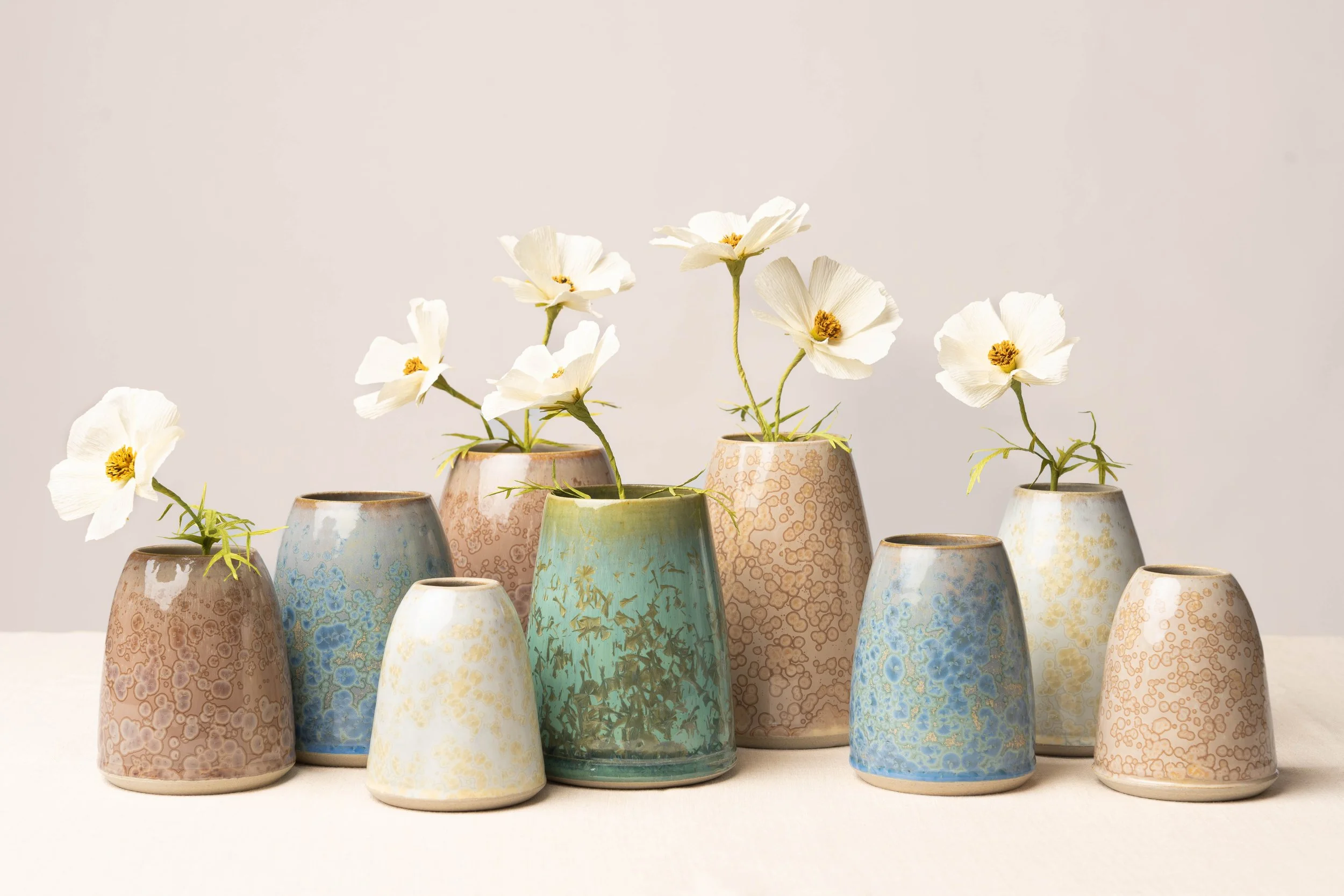
Crystalline Glazes
If you have an interest in glaze chemistry and are willing to spend time testing, observing and carefully documenting the results, then according to Su Thompson, making crystalline glazes is a fascinating process to explore. This has been her experience. “I really enjoy testing glazes,” she says. “Each test result can bring up new questions as well as answers. It creates opportunities to move forward creatively, whilst also giving me a structure that helps me stay focused.”
“Crystalline glazes are a great teacher, because they are so reactive to any changes you make to them. They will sharpen your understanding of material use and glaze application,” she enthuses. “For those curious to explore testing, an ideal place to start is on glazy.org, a great resource for recipes. I started with a number of guided online courses with Ceramics Material Workshop, including their Crystal Ball Class, which covers how crystals are grown within a glaze.”
At present, Su’s interest lies with zinc-silicate crystalline glazes. “Zinc silicate crystalline glazes are typically formulated with relatively low alumina and high levels of zinc oxide. They are fired up to their melting point which, depending on their recipe, will be within the 6–10 cone range and then cooled to a carefully pre-determined temperature, where the crystals start to grow. The temperature that you choose to soak at and for how long will determine the crystal’s shape and size. The longer that you soak for, the larger the crystals will grow. These glazes are very sensitive, and even the smallest changes can affect the result; be it the recipe, firing cycle or pack of the kiln. Because of this, a significant amount of testing and careful record keeping is needed to achieve any form of consistency.”
After graduating from Cardiff School of Art and Design in the mid 1990’s with a BA (hons) in Ceramics, Su was a mould maker, exploring the embodiment of the human image through clay. She then shifted into a sixteen-year career as a hair and make-up artist in the film and television industry. Reflecting on that period, she recalls how “Each production brought a different set of visual storytelling requirements, shaped by both historical context and the director’s vision. Although we worked with a similar hair and make-up kit each time, the outcomes could be entirely different. Even the smallest adjustments, such as the direction a hairline is brushed, could suggest a different period in time, imply an age, or convey an emotion. I’m drawn to those small, subtle shifts, and how they can completely change an aesthetic, creating the feel of something different. This way of working stayed with Su. When she returned to clay and learnt more about crystalline glazes, she became interested in the work of John Tilton (@tiltonpottery), whose matt-crystalline vases particularly caught her attention. His outlined, blanked-out crystals in particular, resonated with Su, and her ongoing interest in subtle controlled variation.
Su prefers a white stoneware clay, as its pale tone does not disrupt the colour of the applied glaze. It’s also easier to handle than porcelain, less absorbent when bisque fired, thus taking up a thinner layer of glaze. This adds an extra level of workability during the glazing process. She currently throws her bowls and vases as the smooth surface helps to ensure a consistent controllable glaze application and therefore, a more reliable finished result. I appreciate the wide-bellied forms that are often paired with zinc-crystalline glazes as they beautifully emphasize the growth of large, impressive crystals. However, whilst embracing these smooth forms, I’m consciously moving towards gentle clusters of smaller crystals, focusing on the pattern formed whilst keeping the glaze movement to a minimum.”
“Looking at my glazes, I feel the thrill and wonder of the crystal’s growth and hope that my audience connects in this way too. I’m reluctant to call the process magical as I’m exploring chemistry through my work, but I hope that my audience is uplifted by its mystery.”
Photo by Kelsey Jade Photos
Article written for South Wales Potters Newsletter ‘Shards’ issue Spring 2026
RECIPE FOR GLAZING
I first studied ceramics in the early 1990’s at Cardiff School of Art and Design before heading off to pursue a career as a hair and make-up artist in the film and television industry. When I eventually returned to clay, it was glazing that drew me in the most strongly.
For me, glaze is not an afterthought. It needs to be considered long before a form is conceived, so that clay and glaze can work together in a way that feels intentional and coherent. What follows is a snapshot of my glazing process as it currently stands. A working recipe, still evolving.
A GLAZE RECIPE FOR CERAMICISTS
Serves : Glaze enthusiasts
Ingredients
Aspirations for success
Plenty of curiosity
An interest in ceramic history
Knowledge of chemical materials
A place to document results
An appropriate kiln
Method
Begin with testing. Small test tiles are invaluable, but it’s also important to test at your working scale.
Create forms that complement the character and behaviour of the chosen glaze.
Consider different methods of application to achieve desired outcomes.
Apply heat using appropriate temperature and speed.
Leave to cool in the kiln.
Remove from kiln and serve with new ideas.
Over the past few years, I’ve worked with three different clay bodies, making deliberate choices about style and relationship between clay and glaze. For each clay and making technique, I’ve developed corresponding glazes.
Carved textured slip cast porcelain with tinted translucent glaze to highlight details.
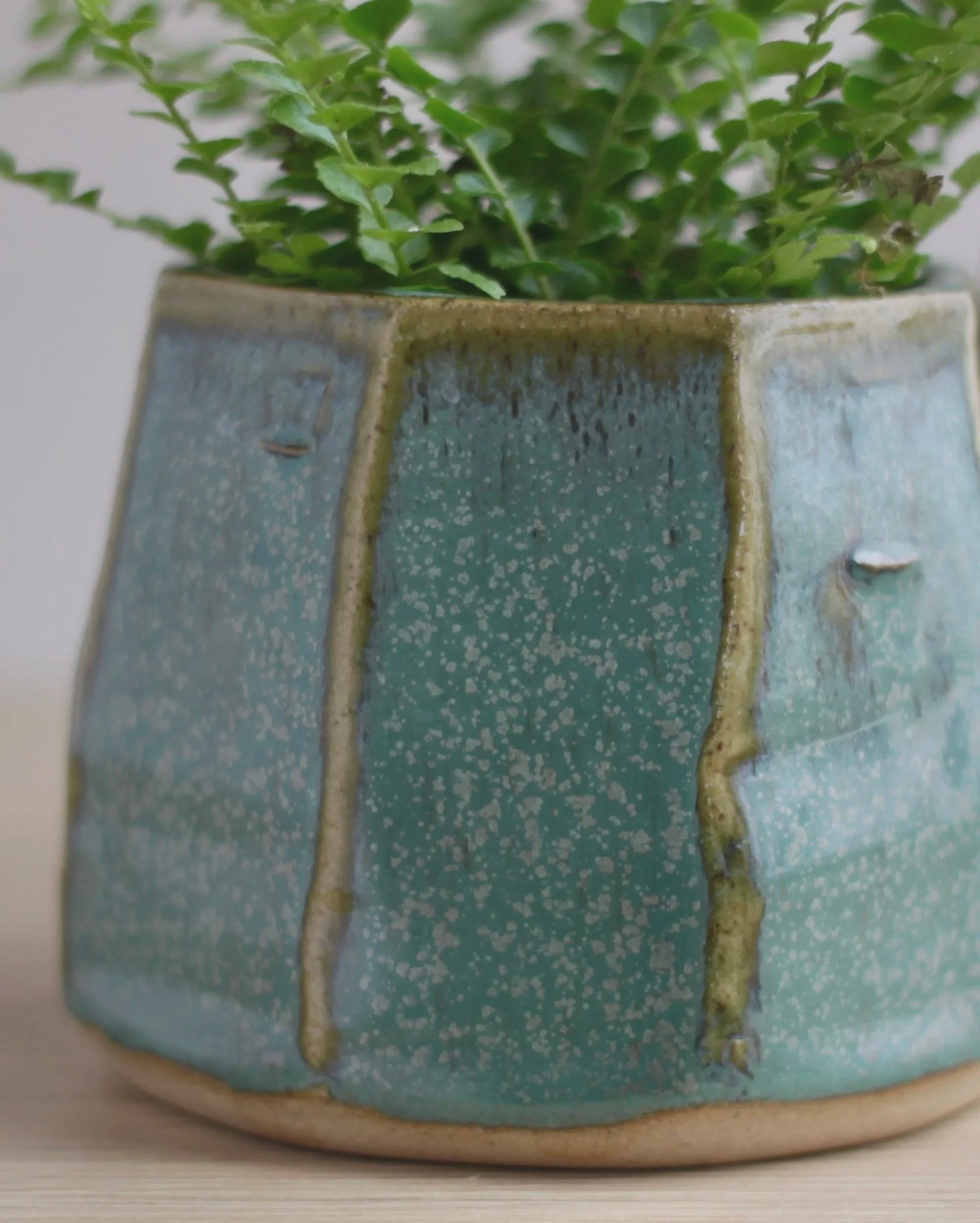
Thrown and faceted low iron stoneware clay with calcium/magnesium crystalline glazes that breaks on edges.
Smoothly thrown off-white stoneware clay with zinc silicate glaze, encouraging the growth of abundant crystals, focusing on colour and pattern.
My glazing practice has been shaped by long hours of testing. Much of my learning has come through what might be described as ‘failures’, from which a successful process is refined. I’m currently working with zinc silicate glazes, which have proven to be a generous teacher. They clearly demonstrate how subtle changes in a recipe can lead to a very specific outcomes, deepening my understanding of how chemistry influences colour, surface and fluidity.
To start your own glaze testing journey, Glazy is a great resource. A library of glaze recipes that cover a multitude of styles, atmospheres and temperatures. For those drawn to these subtleties, I hope the hours at the glaze bench brings you discovery and joy. If you’d like to see more of my work taking shape, please look on instagram, @suthompsonceramics or explore this wbsite further.

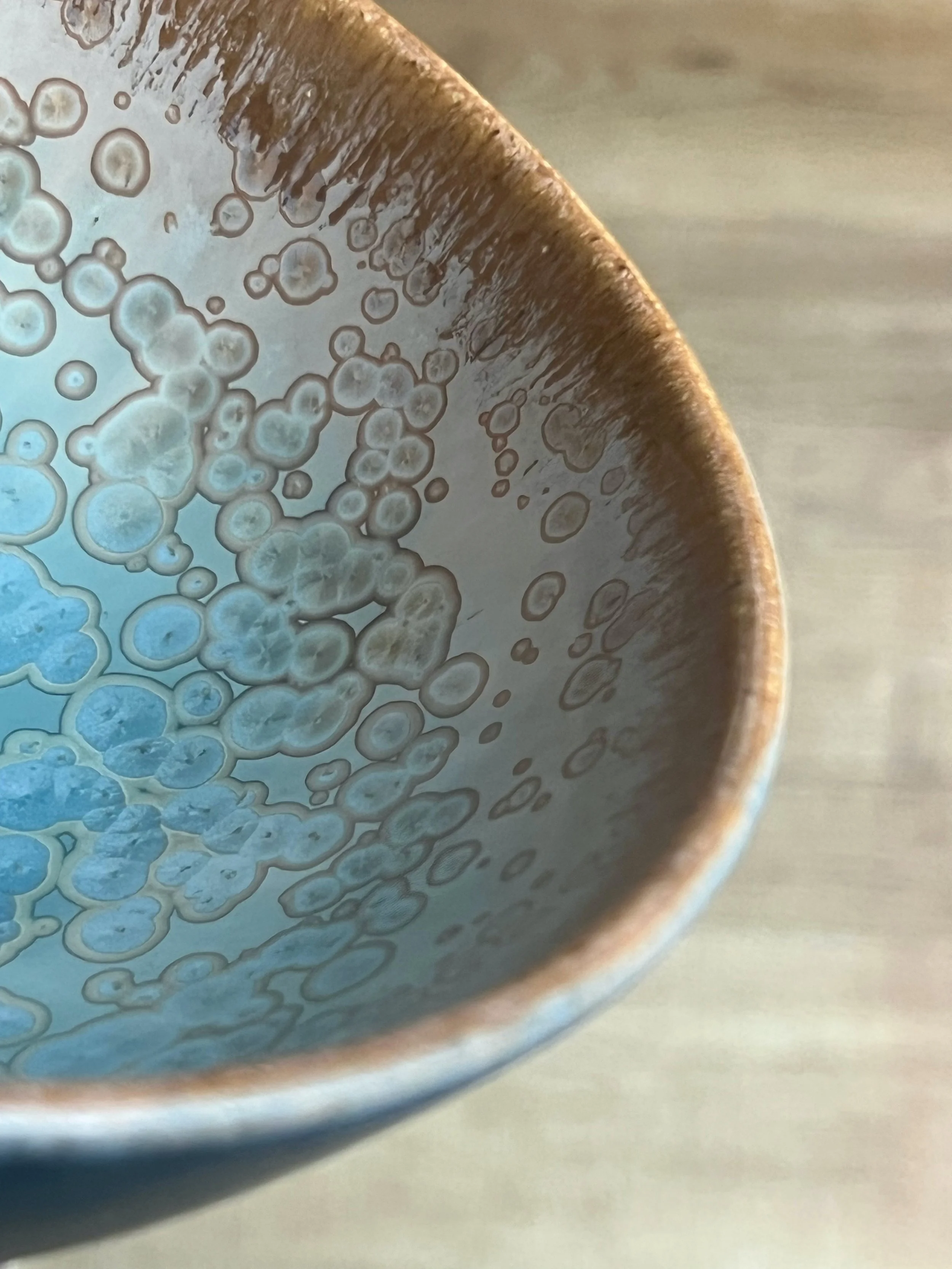
Latest discovery from my making practice: The broken up crystalline glaze on the inside edge of this bowl has happened because of flashing from chrome that is present in the outside glaze of this bowl.